
1. Labrador Sea
The Engine Behind Iceberg Season
Overview
The Labrador Sea is the primary staging basin for iceberg transport in the North Atlantic system. It sits between Greenland and Labrador and functions as the convergence zone where glacial discharge from western Greenland enters a southbound transport pathway.
This basin is not passive. It is dynamic, wind-reactive, and thermally variable — all factors that determine whether an iceberg continues south, stalls, fragments, or exits the system.
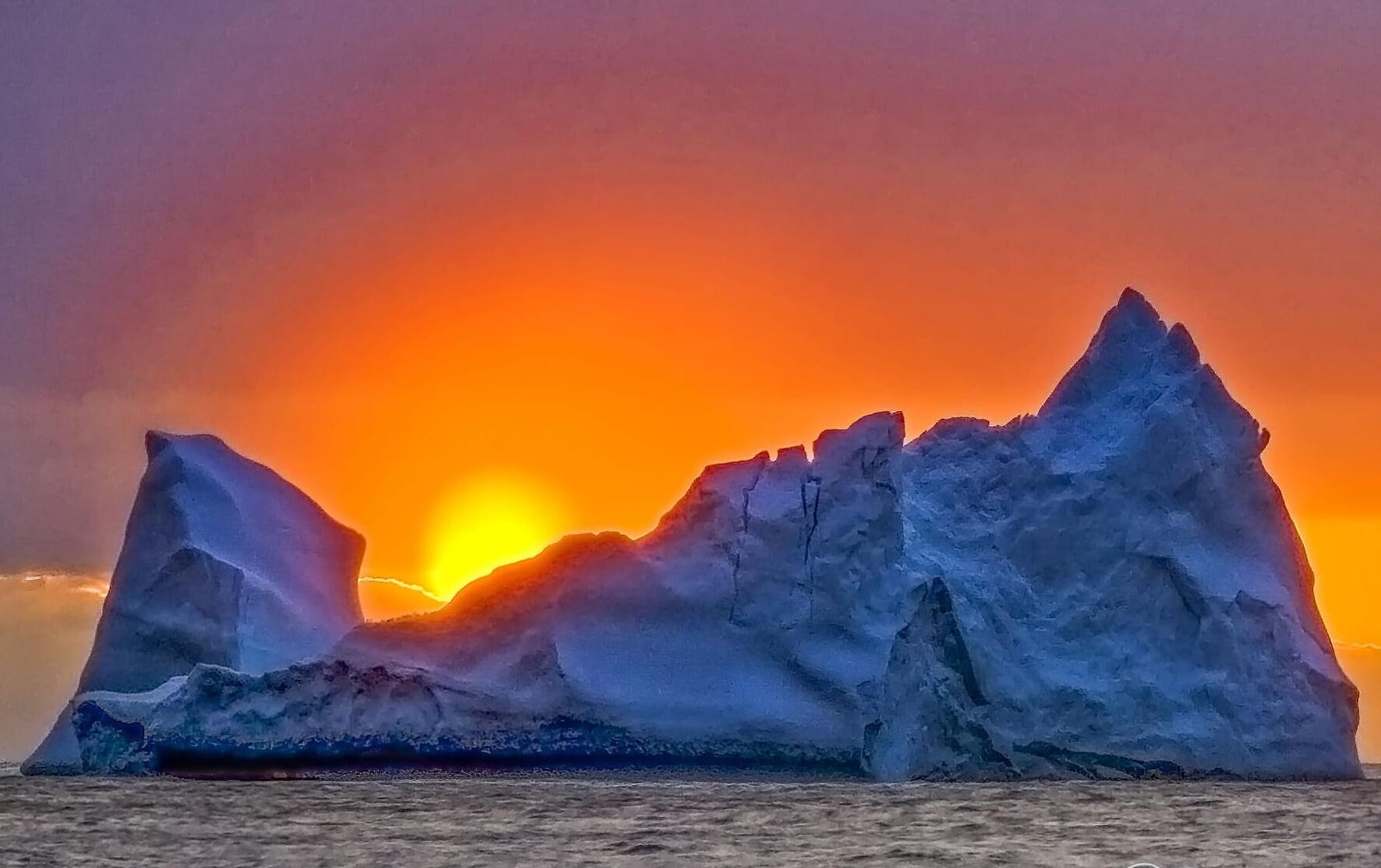
System Role
Source Feed: Icebergs calve primarily from Greenland’s west coast glaciers
Transport Basin: Ice enters the Labrador Sea before aligning with the Labrador Current
Sorting Mechanism: Size, density, and shape determine survivability and drift trajectory
Flow Mechanics
The Labrador Sea operates under three dominant forces:
1. Current Transport
The Labrador Current carries ice south along the continental shelf
Cold, low-salinity water preserves iceberg mass during transit
2. Wind Forcing
Onshore winds push ice toward coastal grounding zones
Offshore winds delay or disperse coastal visibility
3. Thermal Decay
Warmer surface layers accelerate melt
Colder years increase iceberg survivability and downstream reach
Signal Interpretation
When analyzing Labrador Sea conditions:
Strong southbound flow → increased iceberg delivery
Clustering patterns → early-stage grouping before coastal arrival
Persistent cold water → extended iceberg season potential
Operational Relevance
The Labrador Sea determines:
If ice arrives.
When it arrives.
How much survives to reach Newfoundland Island.
It is the upstream control layer of Iceberg Alley.